Salar de Uyuni Travel Guide: Mirror Effect, Tours & What Nobody Tells You
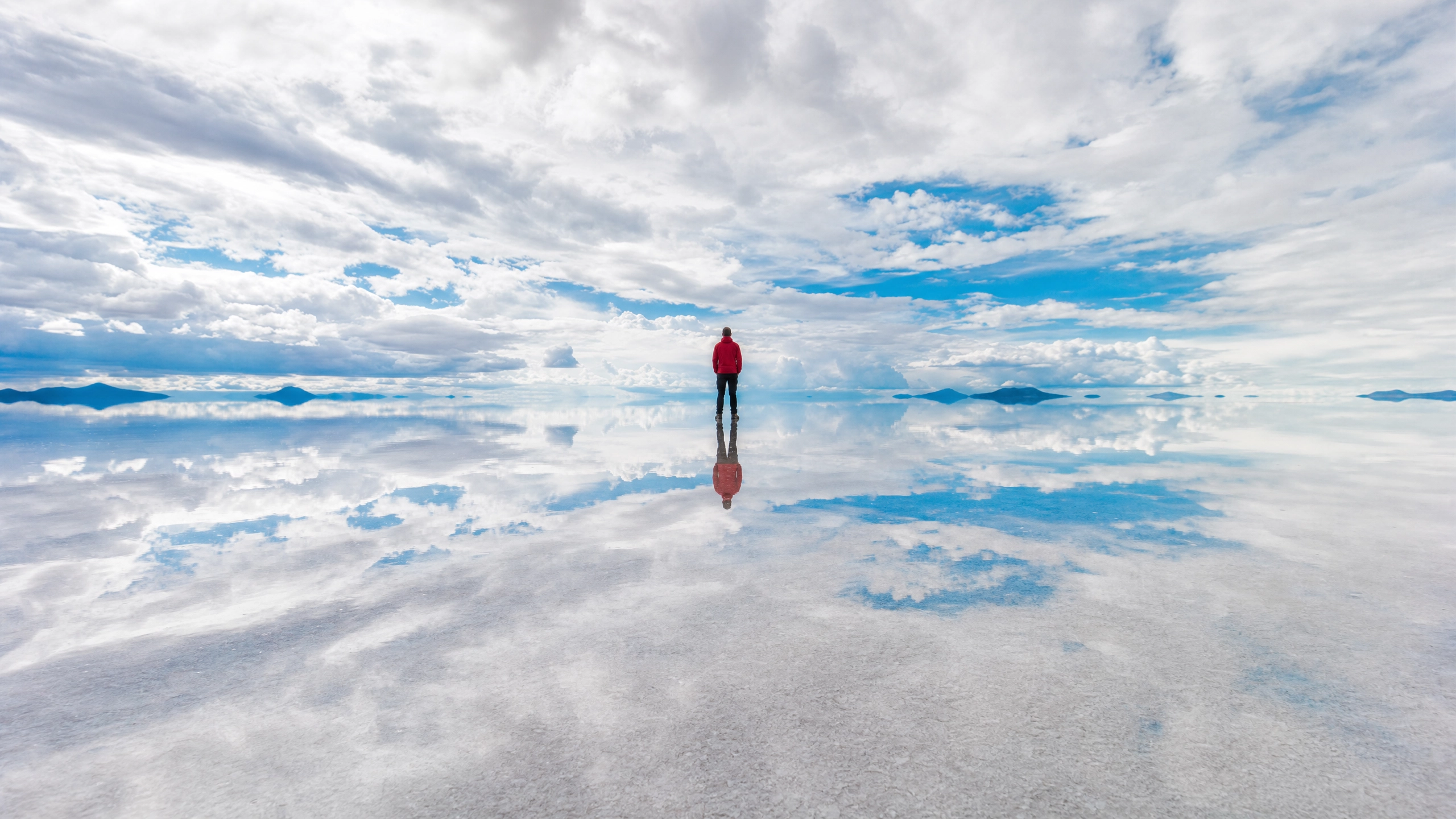
Table of Contents
# Salar de Uyuni Travel Guide: The Ultimate Guide to the World's Largest Salt Flats [2026]
The Salar de Uyuni is one of the most spectacular natural wonders in the world – an endless white expanse that reflects the sky, surreal landscapes with cactus islands, and sunsets that will leave you speechless. Covering 10,582 km², it is the largest salt flat in the world and THE highlight of any trip to Bolivia.
As a German-speaking guide who has lived in Bolivia for over five years and visited the Salar over 100 times, I know every corner of this magical landscape. In this comprehensive guide, you'll learn everything you need to know for your Salar de Uyuni tour: the best tours, costs, best time to travel, packing list, insider tips, and how to avoid the most common mistakes.
Quick overview: The most important facts about the Salar de Uyuni
What is the Salar de Uyuni?
The largest salt flat in the world (10,582 km²), located at an altitude of 3,656 m. A salt crust up to 12 meters thick, which is partially flooded during the rainy season, creating spectacular reflections.
Where is it located?
In southwestern Bolivia, about 350 km south of La Paz. The nearest town is Uyuni (starting point for all tours).
Best time to visit:
- Dry season (May-October): Completely passable, all routes possible, clear visibility, but very cold at night (-10°C)
- Rainy season (December-March): Spectacular mirror effect! But not all routes are passable
Costs:
- 1-day tour: €25-40 (only Salar, no mirror effect)
- 3-day tour: €90-170 (Salar + lagoons + geysers)
- 4-day tour: €120-220 (same as 3-day tour, but more relaxed)
Duration:
Minimum 1 day, recommended 3-4 days
More details on the best time to travel in the Best Time to Travel to Bolivia Guide.
What makes the Salar de Uyuni so special?
1. The largest salt desert in the world
At 10,582 km², the Salar de Uyuni is larger than Cyprus! The salt crust is up to 12 meters thick and contains an estimated 10 billion tons of salt. That's enough to supply the entire human race for centuries.
Origin:
40,000 years ago, there was a huge lake here (Lago Minchin). When it dried up, the salt crust remained.
2. The spectacular mirror effect
During the rainy season (usually January-March), the Salar is partially covered with a thin layer of water. The water perfectly reflects the sky – it looks like you're walking on clouds! This "mirror effect" is one of the most photographed sights in the world.
Important:
The mirror effect is not guaranteed and depends on the current water level. February often offers the best chances.
3. Surreal perspective photos
There is no depth perception on the white salt. This allows for crazy perspective photos: you can "hold people in your hand," "fight" dinosaurs, or "stand" on bottles. Your Instagram followers will go crazy!
Tip:
Bring props (toy dinosaurs, bottles, etc.). Your guide will also have some.
4. Lithium reserves: the "white gold"
The Salar de Uyuni is one of the world's largest lithium deposits (estimates of its share and reserves vary greatly depending on the source and methodology). Lithium is needed for electric car batteries. Bolivia could become the "Saudi Arabia of lithium."
Current:
Lithium mining is controversial. Environmentalists warn of the destruction of the salt flats.
5. Unique wildlife
Despite the extreme conditions, flamingos, vizcachas (Andean hares), and vicuñas (wild llamas) live here. The red and green lagoons south of the salt flat are home to three species of flamingo.
The different tours: Which one is right for you?
There are three main types of salt flat tours. Each has its advantages and disadvantages.
1-day tour: Only the salt flat (€25-40)
Route:
Uyuni → Train cemetery → Colchani → Salar → Incahuasi Island → Sunset → Uyuni
Duration:
10-12 hours (6 a.m. to 6 p.m.)
Included:
- Transport in a 4x4
- Lunch (picnic on the Salar)
- Entrance to Incahuasi Island (approx. 30 Bs)
- Spanish-speaking guide (English +5-10 €)
Not included:
- Breakfast, dinner
- German-speaking guide (+30-50 €)
Advantages:
- Inexpensive: $25-40 (budget-friendly)
- Short: Only 1 day (good if you don't have much time)
- No camping: Back to Uyuni (warm bed!)
Disadvantages:
- Only Salar: No lagoons, no geysers
- Very long: 10-12 hours in the car
- No mirror effect: Only possible during the rainy season (but then not all routes are passable)
- Touristy: Many other groups
Who is it for?
- Budget travelers with little time
- People who don't like multi-day tours
- Travelers who only want to see the Salar
My opinion:
Too short! You only see 20% of what the Salar has to offer. It's better to invest in a 3-day tour.
3-day tour: Salar + lagoons + geysers (€90-170)
Route:
Uyuni → Salar → Incahuasi Island → Chiguana → Lagoons (Colorada, Verde) → Geysers → Uyuni or San Pedro de Atacama (Chile)
Duration:
3 days / 2 nights
Day 1:
Train cemetery → Colchani → Salar → Incahuasi Island → Sunset → Accommodation (salt hotel or Chiguana)
Day 2:
Lagoons (Hedionda, Cañapa, Colorada) → Flamingos → Stone tree → Accommodation (Villa Mar or Huayllajara)
Day 3:
Sol de Mañana geysers (5 a.m.!) → Laguna Verde → Return to Uyuni (or Chilean border)
Included:
- Transport in 4x4 (max. 6 people)
- 2 nights' accommodation (shared room)
- All meals (simple but okay)
- Entrance fees (Salar, lagoons, reserve)
- Spanish-speaking guide
Not included:
- German-speaking guide (+$80-150 surcharge)
- Sleeping bag (rental: €5-10)
- Tips (€10-15 per person)
Advantages:
- Complete: Salar + lagoons + geysers + flamingos
- Value for money: Best balance
- Adventure: Overnight stay in salt hotels
- Sunrise at the geysers: Spectacular!
Disadvantages:
- Very cold at night: -10 to -15°C (December-February: -5°C)
- Simple accommodations: Shared rooms, often no heating
- Long days of driving: 6-8 hours per day in the car
- Simple food: rice, noodles, chicken (vegetarian options available)
Who is it for?
- EVERYONE! The best tour for most travelers
- Good value for money
- Complete experience
My recommendation:
Book a premium tour (€140-170) with better vehicles and heated accommodation. The €30-50 extra is well worth it!
4-day tour: Relaxed version (€120-220)
Route:
Same as the 3-day tour, but more relaxed
Difference:
More time at each location, less driving, more photo stops
Advantages:
- More relaxed: No rushing
- More time for photos
- Better acclimatization: Important at an altitude of 4,000 m!
Disadvantages:
- More expensive: +30-50 € compared to the 3-day tour
- 1 day longer: Not for travelers with limited time
Who is it for?
- Photographers (more time for perfect shots)
- Older travelers (less strenuous)
- People with altitude issues
My opinion:
Worth it if you have time! Much more relaxed than the 3-day tour.
Private tour: Maximum flexibility (€400-800)
What:
Private 4x4 just for your group
Advantages:
- Flexible: You decide the route, stops, pace
- German-speaking guide: Included
- Better vehicles: Newer Land Cruisers
- Better accommodations: Private rooms with heating
- More photo stops: As many as you want!
Disadvantages:
- Expensive: €400-800 (depending on group size)
- Only for groups: Worth it for 4 or more people
Who is it for?
- Families with children
- Older travelers
- Photographers
- People with special needs
My offers:
I offer private tours in German with premium vehicles and heated accommodations. Contact me for a personalized quote!
🎯 Recommended tour
Experience these highlights on my complete Bolivia tour:
→ View complete Bolivia tourBudget vs. premium: What are the differences?
The price range for Salar tours is enormous (€90-220 for 3 days). What are the differences?
Budget tour (€90-120)
Vehicles:
- Old Land Cruisers (15-20 years old)
- Frequent breakdowns
- Uncomfortable seats
- 6 people + driver = cramped!
Accommodations:
- Shared rooms (8-12 beds)
- No heating (freezing cold nights!)
- Shared bathroom (often no hot water)
- Simple salt hotels
Food:
- Simple: rice, noodles, chicken
- Little choice
- Vegetarian options available, but boring
Guide:
- Spanish (English +5-10 €)
- Little explanation
- Focus on transportation, not experience
Risks:
- Breakdowns: Frequent! Sometimes delays lasting hours
- Cold nights: -10°C without heating = hardly any sleep
- Bad experience: Many travelers regret budget tour
Who is it for?
- Backpackers on a very tight budget
- Adventurers who see breakdowns as part of the experience
My opinion:
Don't skimp on the wrong things! The €30-50 extra for premium is worth it.
Premium tour (€140-170)
Vehicles:
- Newer Land Cruisers (5-10 years old)
- Well maintained
- Comfortable seats
- Max. 6 people (more space)
Accommodations:
- Smaller rooms (4-6 beds)
- Heating! (Life saver!)
- Hot water
- Better salt hotels
Food:
- Better: More choice, fresher
- Vegetarian options possible
- Sometimes wine with dinner
Guide:
- English (often German also possible)
- More explanations
- Focus on experience
Advantages:
- Fewer breakdowns: Better vehicles
- Warm nights: Heating = good sleep
- Better experience: More comfort, more fun
Who is it for?
- EVERYONE! The best balance between price and comfort
My recommendation:
Book Premium! The €30-50 surcharge is the best investment you can make on your trip to Bolivia.
Luxury tour (€200-300)
Vehicles:
- Brand new Land Cruisers
- Perfectly maintained
- Very comfortable
- Max. 4 people (plenty of space)
Accommodations:
- Private rooms (2 beds)
- Heating + hot water
- Best salt hotels (e.g., Luna Salada)
- Some with pool!
Food:
- Gourmet: 3-course menus
- Wine included
- Vegetarian/vegan no problem
Guide:
- German-speaking
- Highly experienced
- Focus on photography
Who is it for?
- Honeymooners
- Older travelers
- People who want maximum comfort
My offers:
I offer luxury tours with the best hotels and guides. Contact me!
Best time to travel: Dry or mirror effect?
The time of year has a huge impact on your Salar experience.
Dry season (May-October): Classic Salar experience
Weather:
- Dry, sunny, clear visibility
- During the day: 15-20°C (pleasant)
- At night: -5 to -15°C (freezing!)
Salar:
- Completely dry and passable
- All routes possible
- Incahuasi Island accessible
- Perfect for perspective photos
Advantages:
- All routes passable
- Clear view (perfect for photos)
- More tours available
- Easier to plan
Disadvantages:
- No mirror effect
- Very cold at night (-14 to -26°F!)
- Many tourists (June-August)
- More expensive (high season)
Best months:
- May: End of rainy season, still green, few tourists, inexpensive
- September: Warm, few tourists, moderate prices
- June-August: Perfect weather, but crowded and expensive
Who is it for?
- First-time visitors
- People who want to see all the routes
- Travelers with a fixed schedule
Rainy season (December-March): Spectacular mirror effect!
Weather:
- Rain (mostly in the afternoon)
- During the day: 59-64°F
- At night: 0 to -5°C (warmer than the dry season!)
Salar:
- Partially covered with water (5-20 cm)
- SPECTACULAR MIRROR EFFECT!
- Not all routes are passable
- Incahuasi Island sometimes inaccessible
Advantages:
- MIRROR EFFECT! One of the most beautiful sights in the world
- Warmer at night (32°F to 23°F instead of 14°F)
- Fewer tourists (except in February)
- Cheaper (low season)
- Unique experience
Disadvantages
- Not all routes are passable
- Fewer tours available
- Rain (usually in the afternoon)
- Incahuasi Island often inaccessible
- Mirror effect not guaranteed (depends on rain)
Best months:
- February: Best chances for mirror effect!
- January: Also good, but often still too little water
- March: Water slowly drying up
For whom?
- Photographers: An absolute must!
- People who want to see something unique
- Flexible travelers
My recommendation:
- For photographers: February (mirror effect!)
- For comfort: May or September (dry, few tourists)
- For budget: November or March (inexpensive)
More details in the Best Time to Travel to Bolivia Guide.
How much does a Salar de Uyuni tour cost?
The cost depends on the type of tour, season, and quality.
1-day tour
Budget:
€25-30
Standard:
€30-35
Premium:
€35-40
Private:
€150-250 (for a group)
Included:
Transportation, lunch, entrance to Incahuasi
Not included:
Breakfast, dinner, English-speaking guide
3-day tour
Budget: €90-110
Standard:
€110-140
Premium:
€140-170
Luxury:
€200-300
Private:
€400-600 (for group)
Included:
Transportation, accommodation, all meals, entrance fees
Not included:
Sleeping bag (rental: €5-10), tips (€10-15)
4-day tour
Budget:
€120-140
Standard:
€140-170
Premium:
€170-220
Private:
€500-800 (for group)
Additional costs
Sleeping bag rental:
€5-10 (if you don't have one)
Tips:
€10-15 per person (for guide and cook)
German-speaking guide:
+€80-150 (group tour) or included (private)
Entrance fee to Incahuasi Island:
approx. 30 Bs (often not included, price varies)
Hot water/shower:
€2-5 (some accommodations)
Seasonal price differences
High season (June-August): +20-30%
Mid season (May, September):
Normal price
Low season (November-April): -10-20%
Example 3-day premium tour:
- High season: 170
- Mid season: €140
- Low season: €120
More details on Bolivia costs in the Bolivia Travel Costs Guide.
Packing list: What you absolutely need
The Salar is extreme: hot and sunny during the day, freezing cold at night. The altitude (3,656 m) makes everything more strenuous. Here's what you need:
Clothing (layer up!)
Upper body:
- [ ] Thermal underwear (merino wool)
- [ ] Fleece jacket
- [ ] Down jacket (important!)
- [ ] Wind/rain jacket (waterproof)
- [ ] T-shirts (3-4)
Lower body:
- [ ] Thermal underwear (pants)
- [ ] Trekking pants (long)
- [ ] Warm pants for nighttime
Feet:
- [ ] Trekking shoes (waterproof)
- [ ] Warm socks (merino wool, 3-4 pairs)
- [ ] Sandals (for accommodation)
Head & hands:
- [ ] Warm hat (important!)
- [ ] Gloves (important!)
- [ ] Buff/scarf
- [ ] Sunglasses (category 4!)
- [ ] Sun hat
Sunscreen (EXTREMELY IMPORTANT!)
- [ ] Sunscreen SPF 50+ (minimum!)
- [ ] Lip balm with SPF
- [ ] After-sun lotion
- [ ] Sunglasses (category 4 due to reflection!)
Why is
this so important?
At 3,656 m, UV radiation is extremely strong. The salt also reflects the sun's rays. Without protection, you will get sunburned in 30 minutes!
Sleeping bag
Dry season (May-October):
Comfort range -15°C (important!)
Rainy season (November-April):
Comfort range -5°C
Don't have one?
Rent one on site (€5-10). But the quality is often poor.
My recommendation:
Bring your own sleeping bag! You'll need it.
Altitude sickness prevention
- [ ] Diamox tablets (prescription only)
- [ ] Ibuprofen (for headaches)
- [ ] Coca tea (helps!)
- [ ] Plenty of water (3-4 liters per day)
Important:
Acclimatize for 2-3 days in La Paz before traveling to the Salar!
Camera & props
- [ ] Camera (smartphone is sufficient, but DSLR is better)
- [ ] Spare batteries (cold weather drains batteries quickly!)
- [ ] Power bank
- [ ] Props for perspective photos (toy dinosaurs, bottles, etc.)
Tip:
Your guide also has props. But your own are better!
Miscellaneous
- [ ] Toilet paper (accommodations often don't have any!)
- [ ] Wet wipes (showers are rare)
- [ ] Hand sanitizer
- [ ] Snacks (granola bars, chocolate)
- [ ] Water (1-2 liters for on the go)
- [ ] Plastic bags (for trash and wet clothes)
- [ ] Headlamp (for going to the toilet at night)
Complete packing list in the Bolivia packing list.
Frequently asked questions (FAQ)
When is the best time for the mirror effect?
January to March
offer the best chances, with February often being optimal. The Salar is most likely to be flooded then. Important:
The mirror effect is not guaranteed and depends on the current water level – ask your local tour operator about the current conditions.
January:
Often still too little water
March:
Water slowly drying up
How cold is it at night on the Salar?
Dry season (May-October):
Well below 0°C, in winter (June-July) even below -15°C possible
Rainy season (November-April):
0 to -5°C (warmer!)
Important:
The accommodations often have no heating. Bring a good sleeping bag!
Can I book the tour spontaneously on site?
Yes!
Most travelers book on site in Uyuni.
Advantages:
- 20-30% cheaper than online
- You can check the vehicle and guide
- More room for negotiation
But:
In high season (June-August), it is better to book 1-2 weeks in advance.
Do I need a sleeping bag?
Yes!
Absolutely. The accommodations often only have thin blankets.
Dry season:
Comfort range -15°C
Rainy season:
Comfort range -5°C
Don't have one?
Rent one on site (€5-10), but the quality is often poor.
Is there Wi-Fi on the Salar?
No!
The accommodations do not have Wi-Fi. Cell phone reception is only available in Uyuni and sometimes near Uyuni.
Tip:
Enjoy the digital detox! The Salar is perfect for switching off.
Can I eat vegetarian/vegan food?
Yes!
Just let them know when you book. Most providers can cook vegetarian meals.
But:
The selection is limited (mostly rice, pasta, vegetables). Bring snacks with you!
How do I get to Uyuni?
From La Paz:
- Bus: 10-12 hours, night bus recommended (€15-25)
- Flight: 1 hour, but expensive (€80-150) and often canceled
From Sucre:
- Bus: 6-8 hours (€10-15)
From Potosí:
- Bus: 3-4 hours (€5-8)
My recommendation:
Night bus from La Paz (saves on accommodation + time).
Can I end the tour in Chile (San Pedro de Atacama)?
Yes!
Many 3-day tours end at the Chilean border (Hito Cajón). From there, you can travel to San Pedro de Atacama (1.5 hours).
However:
- Bolivia departure tax: €2-3 (cash!)
- Entry tax Chile: None
- Transport to San Pedro: €10-15 (shuttle)
Important:
When booking, say that you want to end in Chile!
Is the altitude a problem?
Yes!
The Salar is located at 3,656 m, the lagoons at 4,000-4,500 m. Altitude sickness is real.
Symptoms:
Headache, nausea, dizziness, shortness of breath
Prevention:
- Acclimatize for 2-3 days in La Paz
- Medication for altitude sickness only after consulting a doctor (e.g., Diamox/acetazolamide)
- Drink plenty of water
- Move slowly
- Drink coca tea
More details in the Bolivia packing list.
Is it worth hiring a German-speaking guide?
Yes!
If you don't speak Spanish or English.
Advantages:
- Better explanations
- More background knowledge
- Safety
Cost:
+€80-150 (group tour) or included (private tour)
My offers:
I offer German-speaking tours with premium vehicles. Contact me!
What happens in case of breakdowns?
Budget tours:
Breakdowns are common! Sometimes delays can last for hours.
Premium tours:
Less common, as the vehicles are better.
What to do?
Be patient! Your guide has tools and spare parts. Most of the time, it can be fixed.
Tip:
Book a premium tour to avoid breakdowns!
Insider tips: What travel guides don't tell you
After more than 100 Salar tours, I have a few insider tips:
1. Book locally, not online
Why?
20-30% cheaper, you can check the vehicle, more room for negotiation.
Where?
In Uyuni, there are dozens of agencies on the main street (Avenida Ferroviaria).
How?
- Visit 3-5 agencies
- Ask about vehicle age, group size, accommodation
- Negotiate price
- Book 1 day before departure
Exception:
High season (June-August) – then better 1-2 weeks in advance.
2. Avoid the cheapest tours
Why?
Old vehicles, breakdowns, cold nights, bad food.
Better:
Pay €30-50 more for premium. It's worth it!
3. Bring your own snacks
The food on the tours is simple (rice, noodles, chicken). Bring your own snacks:
- Granola bars
- Chocolate
- Nuts
- Dried fruit
Important:
Bring water with you (1-2 liters). There is no water for sale on the Salar!
4. Take photos at sunrise and sunset
The best photos are taken at:
- Sunrise: 6-7 a.m. (soft colors)
- Sunset: 6-7 p.m. (dramatic colors)
Midday:
Too bright, poor photos.
Tip:
Wake your guide early to photograph the sunrise!
5. Bring props for perspective photos
Your guide has props (toy dinosaurs, bottles), but your own are better:
- Toy dinosaurs
- Bottles (various sizes)
- Toy cars
- Anything you want to make look "big" or "small"
Tip:
Creativity is more important than expensive props!
6. Acclimatize in La Paz
Don't fly directly to Uyuni! Acclimatize for 2-3 days in La Paz (approx. 3,250–4,100 m depending on the district) before traveling to the Salar (3,656 m).
Why?
Altitude sickness is real. Your body needs time.
More details in the La Paz travel guide.
7. Choose the right tour length
1 day:
Too short! Only Salar, no lagoons.
3 days:
Perfect for most travelers.
4 days:
More relaxed, better for photographers.
My recommendation:
3 days (or 4 if you have time).
8. Negotiate the price
In Uyuni, bargaining is normal. You can often get a 10-20% discount.
How?
- Visit several agencies
- Say that others are cheaper
- Ask for a group discount (4 or more people)
But:
Don't bargain too hard! Very cheap tours are often poor quality.
9. Bring cash
ATMs in Uyuni are often empty. Bring enough cash:
- Tour costs
- Food/drinks in Uyuni
- Tips
- Emergency reserve
Recommendation:
€200-300 in cash.
10. Enjoy the moment!
The Salar is magical. Put your cell phone away, enjoy the silence, marvel at the vastness.
Tip:
Meditate on the Salar. The silence is overwhelming.
Conclusion: The Salar de Uyuni is worth every penny
Ready for your Bolivia adventure?
Let's plan your perfect private tour together!
The Salar de Uyuni is one of the most spectacular natural wonders in the world. Whether it's the mirror effect in the rainy season or the classic white expanse in the dry season, the Salar will leave you speechless.
My most important insights after more than 100 Salar tours:
1. Book a premium tour: The €30-50 surcharge is worth it! Better vehicles, heating, fewer breakdowns.
2. Choose the right time to travel: Mirror effect (usually January-March, but not guaranteed and dependent on the water level) or dry season (May, September). Both are spectacular!
3. Acclimatize: Spend 2-3 days in La Paz before visiting the Salar. Altitude sickness is real.
4. Bring warm clothes: it gets freezing cold at night (-10°C!). A good sleeping bag is a must.
5. Book locally: 20-30% cheaper than online. Negotiate!
The Salar de Uyuni is not just a place—it is an experience that will change your life.
The vastness, the silence, the beauty—it is indescribable. You have to experience it for yourself.
Ready for your Salar adventure?
With this guide, you have all the information you need to book the perfect tour. The Salar is waiting for you!
---
Ready for your Bolivia adventure with a German-speaking guide?
You now have all the information you need for your trip to Bolivia. But why plan alone when you can have an experienced English-speaking guide at your side?
I offer:
- ✅ German-speaking private tours with premium vehicles
- ✅ Individual route planning perfectly tailored to your wishes
- ✅ Insider knowledge after 5+ years in Bolivia
- ✅ Comfort & safety with heated accommodations and new vehicles
- ✅ Authentic experiences off the beaten track
About the author:
Carsten Müller has been living in Bolivia for over five years and has traveled to the Salar de Uyuni over 100 times – in all seasons, during mirror effect and drought, in sunshine and storms. He knows every corner of this magical landscape and will help you find the perfect tour. His German-speaking tours are focused on comfort, safety, and unforgettable experiences. Contact him for a private tour with premium vehicles and heated accommodations!
Detailed itinerary: What you will see each day
Here is a detailed description of the classic 3-day tour so you know what to expect.
Day 1: Uyuni → Salar → Incahuasi Island (6-8 hours)
06:30:
Pick-up from your hotel in Uyuni
07:00: Train cemetery
- Old steam locomotives from the 19th century
- Perfect for photos
- 20-30 minute stop
07:45: Colchani (salt village)
- Watch salt processing
- Buy souvenirs made of salt
- Visit the salt hotel (from the outside)
- 30-minute stop
8:30 a.m.: Drive to the salt flats!
- The white expanse begins
- First photo stops
- Perspective photos with props
10:00 a.m.: Salt eyes (Ojos de Sal)
- Holes in the salt with water
- Hexagonal patterns
- 15-minute stop
10:30 a.m.: Salt Hotel Playa Blanca
- Built entirely of salt
- Now a museum (no longer possible to stay overnight)
- Bolivian flags
- 20-minute stop
11:30 a.m.: Lunch on the Salar
- Picnic in the middle of the salt flats
- Usually sandwiches, fruit, juice
- 45 minutes
12:30 p.m.: Incahuasi Island
- Island with giant cacti (up to 12 meters high!)
- Hike to the top (30 minutes)
- 360° view over the salt flat
- Admission: €5 (often not included)
- 1.5-hour stay
3:00 p.m.: Perspective photos
- Your guide will find the perfect spots
- Crazy photos with props
- 1 hour (or longer if you want)
5:30 p.m.: Sunset
- Spectacular colors
- Perfect for photos
- 30 minutes
6:30 p.m.: Drive to accommodation
- Salt hotel in Chiguana or near Uyuni
- Dinner (usually soup + main course)
- Early night (the next day starts early!)
Distance:
~124 miles
Highlights:
Salar, Incahuasi Island, sunset
Day 2: Chiguana → Lagoons → Villa Mar (8-10 hours)
06:00:
Breakfast (simple: bread, jam, coffee)
06:30: Departure
08:00: Laguna Hedionda
- First lagoon with flamingos
- Stinks (hence the name "stinking lagoon")
- 20-minute stop
09:00: Laguna Cañapa
- More beautiful lagoon with many flamingos
- Perfect for photos
- 30-minute stop
10:30 a.m.: Desert landscape
- Drive through surreal landscapes
- Volcanoes, rocks, sand
- Photo stops
12:00 p.m.: Lunch
- Usually in a simple restaurant
- Rice, chicken, vegetables
- 45 minutes
1:30 p.m.: Stone Tree (Árbol de Piedra)
- Rock in the shape of a tree
- Shaped by the wind
- 15-minute stop
2:30 p.m.: Laguna Colorada
- HIGHLIGHT! Red lagoon (due to algae)
- Thousands of flamingos (3 species!)
- Spectacular colors
- 1-hour stop
4:30 p.m.: Drive to accommodation
- Villa Mar or Huayllajara
- At an altitude of 4,300 m!
- Very cold at night
6:00 p.m.: Dinner
- Soup + main course
- Early night (up at 4:30 a.m. tomorrow!)
Distance:
~150 miles
Highlights:
Lagoons, flamingos, Laguna Colorada
Day 3: Geysers → Laguna Verde → Uyuni (10-12 hours)
4:30 a.m.:
Wake up (very early!)
5:00 a.m.: Sol de Mañana geysers
- Active geysers at 4,850 m!
- Steam, mud, smell of sulfur
- Spectacular at sunrise!
- 45-minute stop
- CAUTION: Very hot! Don't get too close!
6:30 a.m.: Hot springs
- Bathing in hot springs (optional)
- 28°C water temperature, -5°C outside temperature
- Bring your swimwear!
- 30 minutes
7:30 a.m.: Breakfast
- Return to accommodation
- Simple breakfast
08:30: Laguna Verde
- Green lagoon (due to minerals)
- In front of Licancabur Volcano (5,916 m)
- Spectacular backdrop
- 30-minute stop
09:30: Chilean border (optional)
- If you want to go to San Pedro de Atacama
- Departure tax: €2-3 (cash!)
- Shuttle to San Pedro: €10-15
OR: Return trip to Uyuni 10:00 a.m.:
Long return trip (7-8 hours!)
- Through desert and highlands
- Lunch on the way
- Photo stops
6:00 p.m.:
Arrival in Uyuni
Distance:
~350 km
Highlights:
Geysers, Laguna Verde, sunrise
The highlights in detail: What you shouldn't miss
1. The Salar itself: the white infinity
The main attraction is, of course, the Salar itself. 10,582 km² of white expanse as far as the eye can see. No trees, no houses, just salt and sky.
What makes it so special?
- No perception of depth: You cannot estimate how far away things are
- Perfect silence: no wind, no birds, just silence
- Endlessness: you feel tiny
Best photo spots:
- In the middle of the salt flat (no landmarks)
- At sunset (dramatic colors)
- With props (perspective photos)
2. Incahuasi Island: Cactus oasis
In the middle of the Salar rises Incahuasi Island – a rocky island with giant cacti (up to 12 meters high and 1,200 years old!).
Hike:
- 30 minutes to the top
- 360° view over the salt flat
- Spectacular!
Admission:
€5 (often not included in the tour price)
Important:
During the rainy season (December-March), the island is sometimes inaccessible (too much water).
3. Laguna Colorada: The red lagoon
Laguna Colorada is a 60 km² lake at an altitude of 4,278 m. The water is red (due to algae and minerals) – a surreal sight!
Flamingos:
- Thousands of flamingos (3 species: James, Andean, Chilean)
- Perfect for photos
- Best time: In the morning (less wind)
Why is it red?
- Red algae (Dunaliella salina)
- Minerals (iron, copper)
- Depending on the light: orange to deep red
4. Sol de Mañana geysers: Volcanic activity
At an altitude of 4,850 m, the Sol de Mañana geysers bubble away – active mud pools and steam fountains. The smell of sulfur is intense!
Best time:
Sunrise (5-6 a.m.)
- Steam is most visible
- Dramatic colors
- Magical atmosphere
CAUTION:
The geysers are very hot (80-100°C)! Stay on the paths!
5. Laguna Verde: The green lagoon
Laguna Verde is located directly on the Chilean border, in front of the Licancabur volcano (5,916 m). The water is green (due to magnesium and copper).
Special feature:
- The color changes depending on the wind
- In strong winds: Intense green
- When there is no wind: Gray-green
Perfect for photos:
The volcano in the background is spectacular!
6. Train graveyard: Industrial history
On the outskirts of Uyuni, there are dozens of old steam locomotives from the 19th century. They are rusting away—a surreal sight.
History:
- Uyuni was an important railway junction
- Connection between Bolivia and Chile
- When the mines closed, the trains were left behind
Photography:
Perfect for sunset photos (rusty trains against a dramatic sky).
Accommodations on the Salar: What to expect
Accommodations on the Salar tours are simple. Here's what to expect:
Salt hotels
What:
Hotels built entirely of salt (walls, beds, tables)
Where:
Near Uyuni, Chiguana, Villa Mar
Facilities:
- Shared rooms (4-12 beds)
- Simple beds with thin blankets
- Shared bathroom (often no hot water)
- No heating (very cold at night!)
- No Wi-Fi, no cell phone reception
Temperature at night:
- Dry season: -10 to -15°C
- Rainy season: 0 to -5°C
Important:
Bring a good sleeping bag! The blankets are not sufficient.
Premium accommodations
What:
Better hotels with heating
Where:
Near Uyuni, Villa Mar
Facilities:
- Smaller rooms (4-6 beds)
- Heating! (Life saver!)
- Hot water (sometimes)
- Better beds
- Still no Wi-Fi
Cost:
+30-50 € (worth it!)
Luxury hotels
What:
The best hotels on the Salar
Example:
Luna Salada (near Uyuni)
Facilities:
- Private rooms (2 beds)
- Heating + hot water
- Restaurant, bar
- Pool (heated!)
- Wi-Fi
Cost:
+100-200 € (only for luxury tours)
Food on the Salar: What to expect
The food on the Salar tours is simple but okay.
Budget tours
Breakfast:
- Bread, jam, butter
- Coffee, tea
- Sometimes eggs
Lunch:
- Sandwiches or picnic
- Fruit
- Juice
Dinner:
- Soup (usually vegetable soup)
- Main course: Rice + chicken/meat + vegetables
- Sometimes pasta
Vegetarian:
Possible, but boring (usually just rice + vegetables)
Premium tours
Breakfast:
- Same as budget, but more choice
- Sometimes cereal, yogurt
Lunch:
- Better sandwiches
- Fresh fruit
- Juice
Dinner:
- Better soup
- More choice for the main course
- Sometimes wine
Vegetarian:
Better, more choice
My tips
1. Bring your own snacks: granola bars, chocolate, nuts 2. Bring water: 2-3 liters per day 3. Say vegetarian when booking: otherwise there is only meat 4. Don't expect gourmet food: it's simple, but okay
Safety on the Salar: What you need to know
The Salar is relatively safe, but there are some risks:
1. Altitude sickness
Problem:
The Salar is located at 3,656 m, the lagoons at 4,000-4,500 m. Altitude sickness is real.
Symptoms:
- Headache
- Nausea
- Dizziness
- Shortness of breath
- Insomnia
Prevention:
- Spend 2-3 days acclimatizing in La Paz
- Only take medication for altitude sickness after consulting a doctor (e.g., Diamox/acetazolamide)
- Drink plenty of water (3-4 liters per day)
- Move slowly
- Drink coca tea
What to do if symptoms occur?
- Tell your guide immediately
- Take Diamox
- Drink plenty of water
- If symptoms are severe: abort the tour
2. Cold
Problem:
It gets freezing cold at night (-10 to -15°C).
Risks:
- Hypothermia
- Frostbite (fingers, toes)
Prevention
- Good sleeping bag (comfort range -15°C)
- Warm clothing (layering principle)
- Warm hat, gloves
3. Sunburn
Problem:
At 3,656 m, UV radiation is extremely strong. The salt also reflects the rays.
Risks:
- Severe sunburn (in 30 minutes!)
- Sun blindness (without sunglasses)
Prevention:
- Sunscreen SPF 50+ (reapply every 2 hours!)
- Sunglasses (category 4!)
- Sun hat
- Lip balm with SPF
4. Breakdowns
Problem:
The vehicles are old, breakdowns are common (especially on budget tours).
What to do?
- Be patient! Your guide has tools
- Most of the time, it will be fixed
- Sometimes there are delays of several hours
Prevention:
Book a premium tour (better vehicles, fewer breakdowns)
5. Geysers
Problem:
The geysers are very hot (80-100°C).
Risks:
- Burns (if you get too close)
Prevention:
- Stay on the paths!
- Don't get too close!
- Follow your guide's instructions
Sustainability: How you can protect the Salar
The Salar is fragile. Here's how you can protect it:
1. Take your trash with you
Problem:
Many tourists leave trash behind (plastic bottles, packaging).
Solution:
- Take all your trash with you
- Bring plastic bags for trash
- There is no recycling—bring your trash back to Uyuni
2. Don't buy salt souvenirs
Problem:
Salt souvenirs are mined from the Salar.
Solution:
- Do not buy salt souvenirs
- If you do: Only in Colchani (officially permitted)
3. Respect nature
Problem:
Some tourists disturb flamingos, step on cacti, etc.
Solution:
- Keep your distance from animals
- Do not step on plants
- Follow the paths
4. Choose sustainable providers
Problem:
Many providers are not sustainable (old vehicles, litter, etc.).
Solution:
- Ask about sustainability practices
- Choose providers with newer vehicles
- Avoid the cheapest tours
5. Support local communities
Problem:
Many tours are run by outside companies, so money does not go to locals.
Solution:
- Buy souvenirs in Colchani (local salt village)
- Eat at local restaurants in Uyuni
- Tip guides and cooks
Conclusion: The Salar de Uyuni is a must-see!
The Salar de Uyuni is not only the largest salt flat in the world—it is a magical place that will leave you speechless. Whether it's the mirror effect in the rainy season or the white expanse in the dry season, whether it's a budget tour or a luxury experience—the Salar is worth every penny.
My most important tips:
- Book a premium tour (€30-50 more, but a much better experience)
- Acclimatize in La Paz (2-3 days)
- Bring warm clothes and a good sleeping bag
- Choose the right time to travel (mirror effect or dry season)
- Book locally in Uyuni (20-30% cheaper)
The Salar de Uyuni will change your life.
The vastness, the silence, the beauty – it's indescribable. You have to experience it for yourself!
Ready for your Salar adventure?
Contact me for a premium tour in English with heated accommodation and new vehicles. I'll show you the Salar like you've never seen it before!
---
Ready for your Bolivia adventure with a German-speaking guide?
You now have all the information you need for your trip to Bolivia. But why plan alone when you can have an experienced German-speaking guide at your side?
I offer:
- ✅ German-speaking private tours with premium vehicles
- ✅ Individual route planning perfectly tailored to your wishes
- ✅ Insider knowledge after 5+ years in Bolivia
- ✅ Comfort & safety with heated accommodations and new vehicles
- ✅ Authentic experiences off the beaten track
About the author:
Carsten Müller has traveled to the Salar de Uyuni over 100 times – in mirror effect and dry conditions, in sunshine and storms, at -15°C and +20°C. He knows the best photo spots, the safest routes, and the best accommodations. His premium German-language tours are designed for comfort, safety, and unforgettable experiences. Contact him for a private tour that is perfectly tailored to your wishes!
Ready for your Bolivia adventure?
Let's plan your perfect private tour together!
Share Article
You might also like
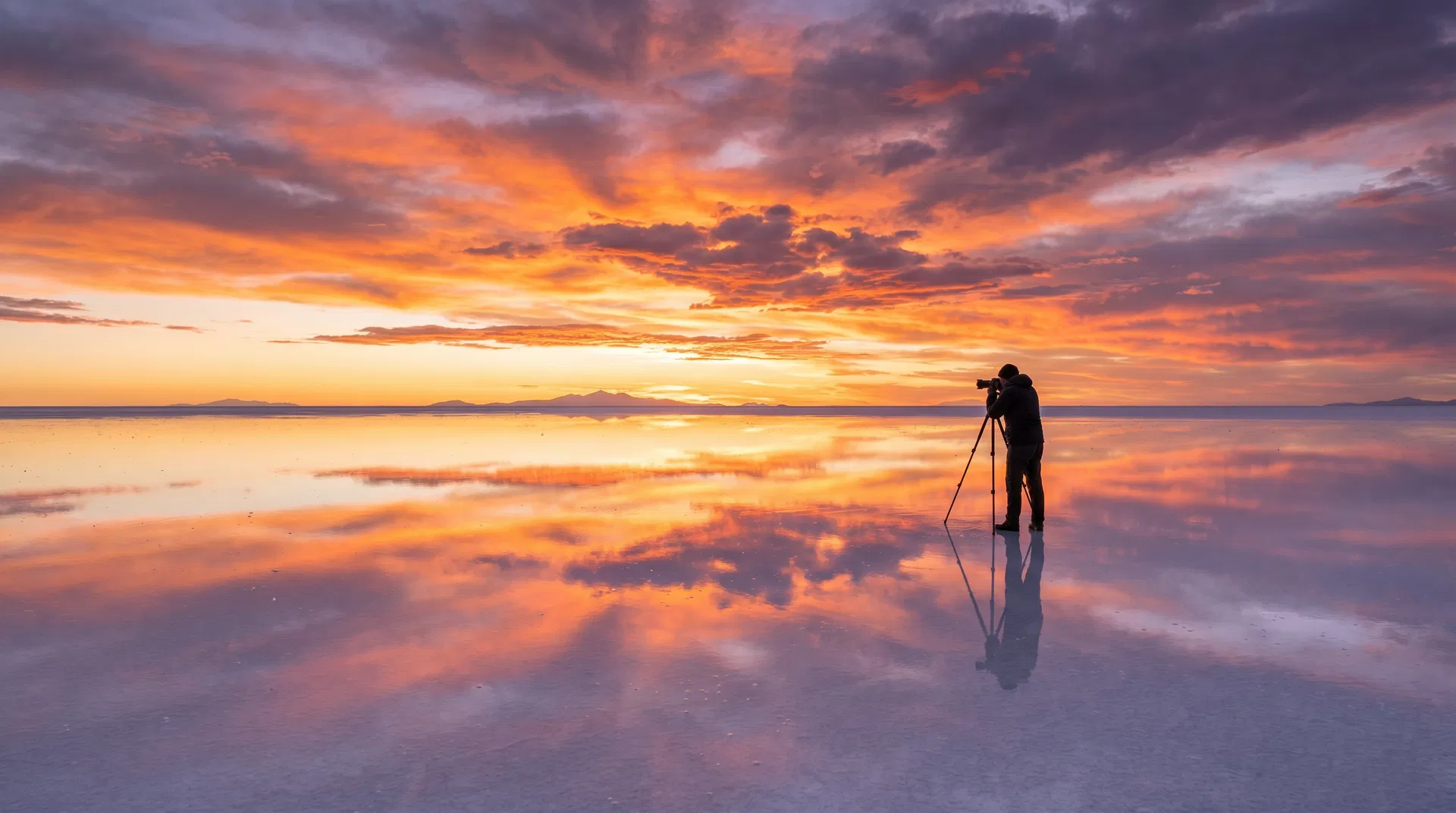
Salar de Uyuni Photography: The Best Tips for Perfect Mirror Images
The mirror effect of the Salar de Uyuni is one of the most spectacular photo opportunities in the world. As a local guide, I'll reveal when and how to capture the perfect reflection – with specific camera settings and insider tips.
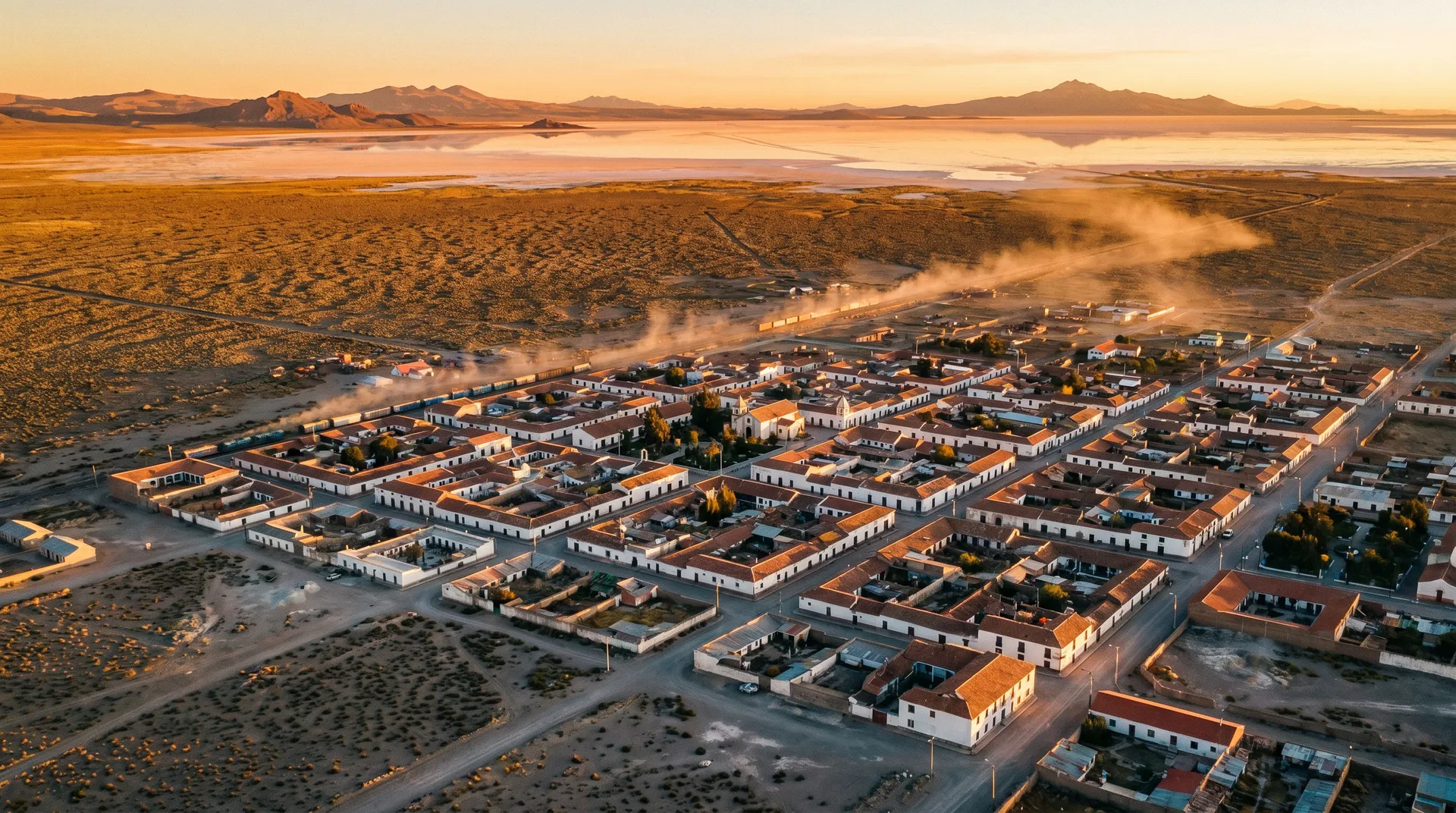
Uyuni City Guide: More than just the gateway to the salt desert [2026]
Most travelers only see Uyuni as a stopover to the famous salt desert - one night in a hostel, off in the jeep the next morning, and goodbye. Yet this rugged, authentic desert town at an altitude of 3,660 meters has more to offer than meets the eye.