La Paz Travel Guide: Altitude Sickness, Cable Car & Hidden Gems [2026]
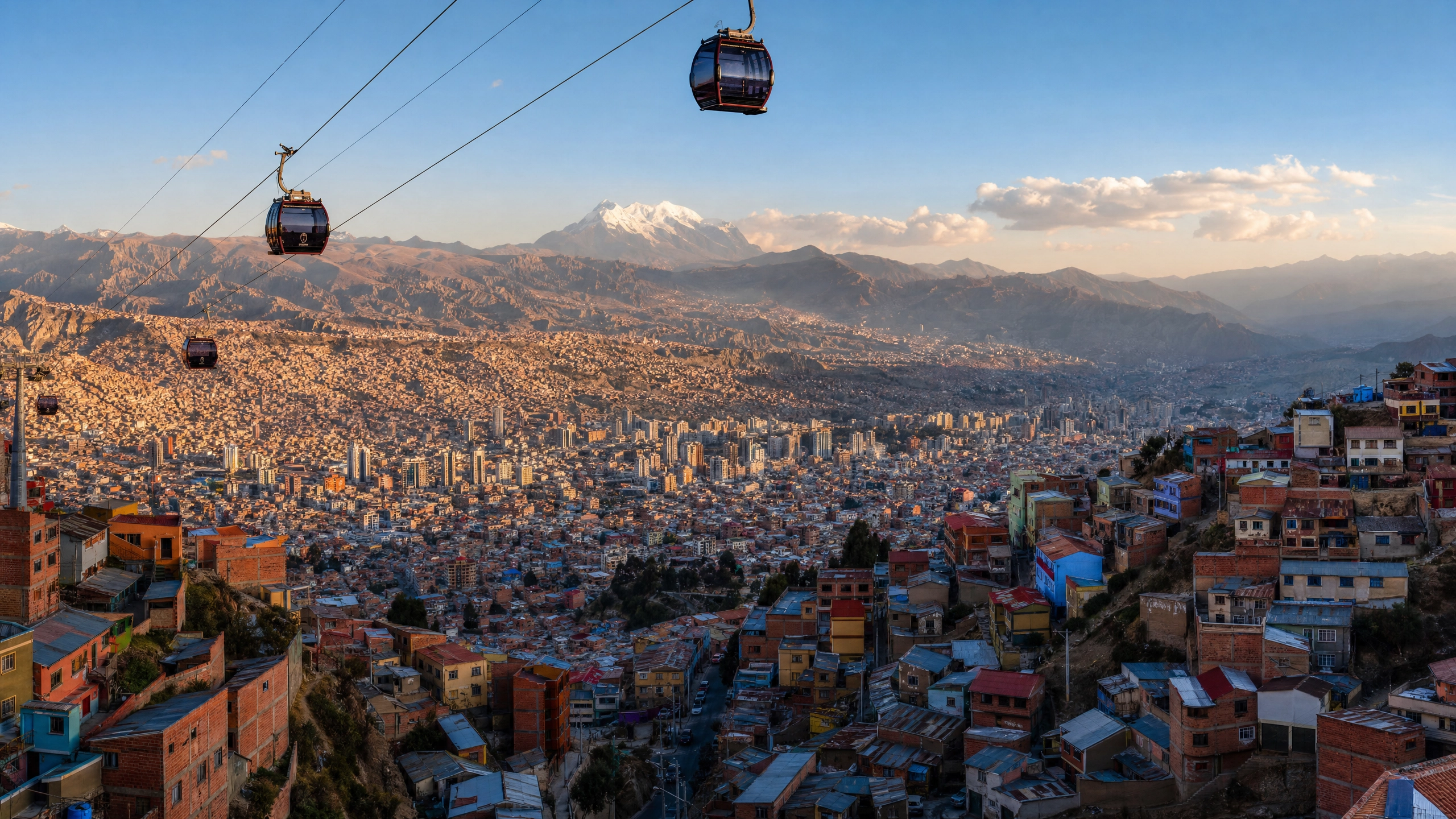
Table of Contents
# La Paz Travel Guide: The Highest Seat of Government in the World [2026]
La Paz is no ordinary city. At 3,640 meters above sea level, it is the highest seat of government in the world—a city that literally sits in the clouds. Sucre is the constitutional capital of Bolivia, while La Paz is the seat of government (executive and legislative). Built in a deep valley surrounded by snow-capped Andean peaks, La Paz is a visual and cultural spectacle.
As a German-speaking guide who has lived in La Paz for over five years, I know every corner of this fascinating city. In this comprehensive guide, you will learn everything you need to know for your visit to La Paz: the best sights, insider tips on how to avoid altitude sickness, where to eat, and how to experience the authentic La Paz – off the beaten track.
Quick overview: The most important facts about La Paz
Location:
3,640 m above sea level (city center), up to 4,100 m (El Alto)
Population:
~900,000 (La Paz) + ~1 million (El Alto) = ~2 million metropolitan area
Climate:
Cold, dry, thin air. Temperatures: 5-18°C (depending on the season)
Best time to visit:
May-October (dry season, clear view of the mountains)
Language:
Spanish, Aymara (indigenous language)
Currency:
Boliviano (BOB), €1 ≈ 7-8 BOB
Length of stay:
Minimum 2 days, recommended 3-4 days
Highlights:
- Teleférico (cable car system) – spectacular views
- Witches' Market (Mercado de las Brujas)
- Valle de la Luna (Moon Valley)
- Death Road (Yungas Road) Mountain bike tour
- Cholitas wrestling
- Tiwanaku ruins (day trip)
Find out more about the best time to travel in the Best Time to Travel Bolivia Guide.
Why La Paz is so special
1. The highest seat of government in the world
La Paz is the highest seat of government in the world. Bolivia has two central cities: Sucre is the constitutional capital, while La Paz is the seat of government (executive and legislative). At an altitude of 3,640 m, the air is thin – you'll notice it when climbing stairs!
Special feature:
The city is built in a deep valley. The center is at 3,640 m, the suburbs (El Alto) at 4,100 m. This means that the city has an altitude difference of 500 m!
2. Spectacular location
La Paz lies in a valley surrounded by the snow-capped peaks of the Cordillera Real. Illimani (6,438 m) towers over the city – a spectacular sight, especially at sunrise.
Best view:
From El Alto (4,100 m) or from the Teleférico (cable car).
3. Indigenous culture
La Paz is one of the most indigenous cities in South America. Over 60% of the population are Aymara or Quechua. You will see cholitas (indigenous women) in traditional pollera skirts and bowler hats everywhere.
Authentic:
La Paz is not touristy. It is a real, lively city with indigenous culture.
4. The Teleférico: The largest public transit cable car network in the world
Mi Teleférico in La Paz/El Alto is considered the largest public transit cable car network in the world. 11 lines connect La Paz with El Alto. It is not only a means of transportation but also a tourist attraction – the views are spectacular!
Cost:
approx. 3 bolivianos per trip (conversion to EUR varies depending on the exchange rate)
5. Adventure on your doorstep
From La Paz, you can embark on spectacular adventures:
- Death Road: Mountain bike tour on the famous Yungas Road (renowned for its history of accidents)
- Huayna Potosí: 6,088 m summit (feasible for beginners!)
- Tiwanaku: Pre-Inca ruins (UNESCO World Heritage Site)
- Lake Titicaca: Highest navigable lake in the world (3 hours away)
The top sights in La Paz
1. Teleférico (cable car): The highlight!
The Teleférico is THE highlight of La Paz. 11 lines connect La Paz with El Alto, and the views are spectacular!
Best lines:
- Red line: From Sopocachi to El Alto (30 minutes, spectacular views)
- Yellow line: From the center to El Alto
- Blue line: Panorama over the city
Cost:
€0.50 per trip (regardless of distance)
My tip:
Take the red line at sunset (5-6 p.m.). The view of Illimani is spectacular!
Opening hours:
5:30 a.m.-10:30 p.m. (daily)
2. Witches' Market (Mercado de las Brujas)
The Witches' Market is a market where witches (brujas) sell traditional remedies, amulets, and... dried llama fetuses!
What's on offer?
- Dried llama fetuses (for sacrificial rituals)
- Medicinal herbs, teas
- Amulets, talismans
- Coca leaves
Why llama fetuses?
In Aymara culture, llama fetuses are buried under the foundations of houses to honor Pachamama (Mother Earth) and bring good luck.
Location:
Calle Linares / Calle Sagárnaga (center)
My tip:
Respect the culture! Ask before taking photos.
3. Valle de la Luna (Moon Valley)
Valle de la Luna is a surreal landscape of rocks shaped by erosion. It looks like the moon – hence the name!
Location:
10 km south of La Paz (Mallasa)
Duration:
1-2 hour hike
Admission:
€3-4
How to get there:
- Minibus from the center (€1, 30 minutes)
- Taxi (€8-10, 20 minutes)
My tip:
Combine with a visit to the cactus gardens (next door).
4. Mirador Killi Killi: Best view over La Paz
Mirador Killi Killi is a viewpoint with a 360° view over La Paz and Illimani.
Location:
Sopocachi (upscale neighborhood)
How to get there:
- Minibus from the center (€0.60, 15 minutes)
- Taxi (€3-4, 10 minutes)
Admission:
Free!
Best time:
Sunset (5-6 p.m.)
My tip:
Bring snacks and drinks with you. There are no vendors at the top.
5. Plaza Murillo: The political heart
Plaza Murillo is the main square in La Paz. The presidential palace (Palacio Quemado) and the parliament are located here.
Worth seeing:
- Presidential palace (from the outside)
- Cathedral
- Feeding the pigeons (lots of pigeons!)
Location:
Center (Calle Comercio)
My tip:
Visit on Sunday (less traffic, more relaxed).
6. San Francisco Church & Plaza
San Francisco Church is the most famous church in La Paz – a Baroque church from the 16th century.
Special feature:
A mixture of European and indigenous architecture.
Location:
Plaza San Francisco (city center)
Admission:
Free (church), €3 (roof tour with view)
My tip:
Take the roof tour! The view is spectacular.
7. Jaén Street: Colonial architecture
Calle Jaén is the best-preserved colonial street in La Paz – colorful houses, cobblestones, museums.
Museums:
- Museo Costumbrista (Traditions)
- Museo del Oro (Gold)
- Museo de Instrumentos Musicales (Musical Instruments)
Admission:
€2-3 per museum
My tip:
Visit all 3 museums (combined ticket €5).
8. Mercado Lanza: Authentic food
Mercado Lanza is a local market with authentic Bolivian food – perfect for almuerzo (lunch)!
What to eat?
- Almuerzo (menu: soup + main course + juice) for €2-3
- Salteñas (Bolivian empanadas) for €0.50
- Fresh juices for €1
Location:
Calle Lanza (center)
My tip:
Try salteñas for breakfast (10-11 a.m.)!
Recommended tour
Experience these highlights on my La Paz & Surroundings tour:
→ See La Paz & SurroundingsAdventures around La Paz
1. Death Road (Yungas Road): Mountain bike tour
Death Road is one of the most popular activities in La Paz – a mountain bike tour on the famous Yungas Road, which is known for its history of accidents. Today, it is mainly used for tourism, and safety standards vary greatly depending on the provider.
Route:
La Cumbre (4,700 m) → Yolosa (1,200 m) = 3,500 m elevation difference!
Duration:
1 day (6-8 hours)
Cost:
€45-75 (depending on the provider)
Difficulty:
Medium (no mountain biking experience necessary)
Is it dangerous?
No! The road is now only used by tourists. Good providers have safety equipment.
My tip:
Book a good provider (not the cheapest!). Safety first.
2. Huayna Potosí (6,088 m): Summit for beginners
Huayna Potosí is a 6,088 m high summit that even beginners (with a guide) can climb!
Duration:
2-3 days
Cost:
€160-270 (depending on the provider)
Difficulty:
Medium to difficult (no mountaineering experience necessary, but good fitness required)
Best time:
May-September (dry season)
My tip:
Acclimatize for 4-5 days in La Paz before attempting the summit!
3. Tiwanaku Ruins: UNESCO World Heritage Site
Tiwanaku is a pre-Inca ruin site (500-1000 AD) – one of the most important archaeological sites in South America!
Location:
70 km west of La Paz (2 hours' drive)
Duration:
Half day or full day
Cost:
- Entrance fee: €10
- Tour: €18-35 (including transport, guide)
Highlights:
- Sun Gate (Puerta del Sol)
- Kalasasaya Temple
- Ponce Monolith
My tip:
Book a tour with an English-speaking guide (more background information!).
4. Lake Titicaca & Copacabana: Day trip
Lake Titicaca is the highest navigable lake in the world (3,812 m) – only 3 hours from La Paz!
Route:
La Paz → Copacabana (3h bus) → Isla del Sol (ferry)
Duration:
1-2 days
Cost:
- Bus La Paz-Copacabana: €3-5 (one way)
- Ferry Isla del Sol: €2-3
- Entrance fee Isla del Sol: €2
Highlights:
- Copacabana (colonial town on the lake)
- Isla del Sol (Island of the Sun, Inca ruins)
- Boat trip on Lake Titicaca
My tip:
Stay overnight in Copacabana (more authentic than a day trip).
5. Chacaltaya: Highest ski slope in the world (formerly)
Chacaltaya was the highest ski slope in the world (5,395 m) – today there is no more snow (climate change), but the view is spectacular!
Location:
30 km north of La Paz
Duration:
Half day
Cost:
- Taxi: €40-60 (for a group)
- Tour: €20-30 per person
My tip:
Only in clear weather (May-October). Otherwise, the view is not good.
Where to eat in La Paz?
La Paz has a diverse food scene – from authentic Bolivian food to international restaurants.
Authentic Bolivian food
Mercado Lanza (budget):
- Almuerzo (set menu): €2-3
- Salteñas: €0.50
- Authentic, local
Gustu (upscale cuisine):
- Bolivian gourmet cuisine
- 3-course menu: €40-60
- Reservations recommended
Popular Cocina Boliviana (mid-range):
- Traditional dishes
- Main course: €8–12
- Good atmosphere
International cuisine
Hallwright's (British/pub):
- Fish & chips, burgers
- Main course: €10-15
- Good craft beer
Namaste (Indian):
- Curry, tandoori
- Main course: €8-12
- Vegetarian-friendly
Propiedad Pública (fusion):
- Modern cuisine
- Main course: €12-18
- Hipster atmosphere
Cafés & Bakeries
Alexander Coffee (coffee):
- Best coffee in La Paz!
- Coffee: €2–4
- Cozy
Typica (coffee & breakfast):
- Breakfast: €5-8
- Good coffee
- Modern atmosphere
My tip:
Try salteñas for breakfast (10 a.m.–11 a.m.) at any market!
Altitude sickness in La Paz: How to avoid it
La Paz is located at 3,640 m – altitude sickness is real! Almost everyone experiences symptoms in the first 1-2 days.
Symptoms
- Headache
- Nausea
- Dizziness
- Shortness of breath
- Insomnia
- Loss of appetite
Prevention
1. Arrive slowly: Only engage in light activities for the first 24 hours 2. Drink plenty of water: 3-4 liters per day 3. Drink coca tea: It really helps! Drink 3-4 cups per day 4. Medication: Altitude sickness prophylaxis (e.g., Diamox/acetazolamide) only after consulting a travel medicine specialist 5. Eat light meals: Heavy meals make it worse 6. Avoid alcohol: No alcohol for the first 2 days! 7. Move slowly: No running up stairs!
What to do if symptoms occur?
- Mild symptoms: Coca tea, water, rest, ibuprofen
- Moderate symptoms: Diamox, oxygen (hotels often have oxygen connections)
- Severe symptoms: See a doctor immediately or descend to a lower altitude!
My tip:
Plan 2-3 days of acclimatization in La Paz before traveling to Salar de Uyuni or Huayna Potosí!
More details in the Bolivia packing list.
Practical tips for La Paz
Getting there
Airplane:
- El Alto Airport (4,061 m – highest international airport in the world!)
- 30 minutes from the center
- Taxi: €8-12 (negotiate beforehand!)
- Minibus: €1-2 (slower)
Bus:
- From Uyuni: 10-12h night bus (€15-25)
- From Sucre: 12-14h night bus (€15-30)
- From Copacabana: 3-4 hours (€3-5)
Getting around in La Paz
Minibus (Micro):
- €0.40-0.60 per trip
- Everywhere, but chaotic
- Call out your destination, the driver will tell you if he is going there
Taxi:
- €2-5 within the city
- Negotiate in advance (no meters!)
- Or use apps: Uber, Cabify
Teleférico (cable car):
- €0.50 per trip
- Fast, safe, spectacular views
- Best option!
On foot:
- The center is compact
- But: Steep hills! Walk slowly (altitude!)
Safety
La Paz is relatively safe, but:
Avoid:
- El Alto at night (dangerous!)
- Dark alleys at night
- Taxis from the street (use apps)
Tips:
- Leave valuables at the hotel
- Don't walk around with your cell phone in your hand
- Carry your backpack in front (pickpockets!)
Money
ATMs:
- Everywhere in the city center
- But often empty or broken!
- Bring cash (euros or dollars)
Currency exchange:
- Currency exchange offices (Casas de Cambio) are more reliable than ATMs
- Find out the current exchange rate on site (officially fixed at 6.96 Bs/USD, different rates may exist)
Credit cards:
- Accepted in upscale restaurants/hotels
- Not accepted in markets or small restaurants
More information on costs in the Bolivia Travel Costs Guide.
Best time to travel
Dry season (May-October):
- Clear view of the mountains (Illimani!)
- Less rain
- Cold at night (0-5°C)
- Best time!
Rainy season (November-April):
- Rain often in the afternoon
- Cloudy (poor visibility)
- Warmer (5-10°C at night)
- Still okay
More details in the Best Time to Travel to Bolivia Guide.
Frequently asked questions (FAQ)
How long should I stay in La Paz?
Minimum:
2 days (1 day acclimatization, 1 day sightseeing)
Recommended:
3-4 days (acclimatization + sightseeing + day trips)
Is La Paz dangerous?
No!
La Paz is relatively safe for tourists. But:
- Avoid El Alto at night
- Use taxi apps instead of street taxis
- Keep valuables hidden
Do I need a guide?
For sightseeing:
No, you can explore everything on your own.
For adventure:
Yes! Death Road, Huayna Potosí, and Tiwanaku are better with a guide.
Can I drink tap water?
No!
Only drink bottled water or boiled water.
Where to stay in La Paz?
Budget:
Sopocachi or San Pedro (hostels €8-15)
Mid-range:
Sopocachi (hotels €30-60)
Luxury:
Zona Sur or Sopocachi (hotels €80-150)
My tip:
Sopocachi is the best neighborhood (safe, central, good restaurants).
Is there Wi-Fi?
Yes!
Almost all hotels, cafes, and restaurants have Wi-Fi.
But:
Cell phone networks are sometimes slow. Buy a local SIM card (Entel, Tigo) for €8-15.
Conclusion: La Paz is a city that changes you
La Paz is not an easy city. The altitude, the cold, the chaos – it can be overwhelming. But that's exactly what makes La Paz so special. It's a city that challenges you, takes you out of your comfort zone, and rewards you with unforgettable experiences.
My most important tips:
- Acclimatize:
Take it slow for 2-3 days
2. Ride the Teleférico:
The views are spectacular!
3. Try authentic food:
Mercado Lanza, Salteñas
4. Do the Death Road:
An unforgettable experience!
5. Respect the culture:
La Paz is an indigenous city
La Paz will change you.
The altitude, the culture, the landscape – it's a city like no other. You'll either love it or hate it. But you'll never forget it.
Ready for your La Paz adventure?
With this guide, you have all the information you need to discover the city. La Paz is waiting for you!
---
Ready for your Bolivia adventure with a German-speaking guide?
Ready for your Bolivia adventure?
Let's plan your perfect private tour together!
You now have all the information you need for your trip to Bolivia. But why plan alone when you can have an experienced English-speaking guide at your side?
I offer:
- ✅ German-speaking private tours with premium vehicles
- ✅ Individual route planning perfectly tailored to your wishes
- ✅ Insider knowledge after 5+ years in Bolivia
- ✅ Comfort & safety with heated accommodations and new vehicles
- ✅ Authentic experiences off the beaten track
About the author:
Carsten Müller has been living in La Paz for over five years and knows the city like the back of his hand. He has experienced altitude sickness, driven the Death Road 50+ times, and knows the best restaurants, the best viewpoints, and the best insider tips. His German-language tours show you the authentic La Paz – off the beaten track. Contact him for a private tour of La Paz and the surrounding area!
Neighborhoods of La Paz: Where to find what
La Paz is divided into different neighborhoods (zonas). Each has its own character.
Center (Centro): The historic heart
Character:
Colonial architecture, markets, churches, chaotic
Sights:
- Plaza Murillo
- San Francisco Church
- Witches' Market
- Jaén Street
Food:
Authentic markets (Mercado Lanza)
Accommodation:
Budget hostels (€8-20)
Who is it for?
Backpackers, culture lovers
Sopocachi: The upscale neighborhood
Character:
Quiet, safe, many restaurants and cafés
Sights:
- Mirador Killi Killi
- Montículo Park
Food:
Best restaurants and cafés
Accommodation:
Mid-range hotels (€30-80)
Who is it for?
Everyone! Best neighborhood for tourists.
Zona Sur: The wealthy neighborhood
Character:
Modern, safe, spacious
Sights:
- Valle de la Luna
- Shopping malls
Food:
International restaurants
Accommodation:
Luxury hotels (€80-200)
Who is it for?
Luxury travelers, business people
But:
Far from the center (30-45 minutes)
El Alto: The city above the clouds
Character:
Poor, chaotic, authentic, dangerous at night
Sights:
- Cholitas wrestling (Thursdays & Sundays)
- Authentic markets
For whom?
Adventurers (only during the day!)
My tip:
Only visit El Alto for Cholitas Wrestling or with a guide.
Cholitas Wrestling: A unique experience
Cholitas wrestling is a unique experience – indigenous women (Cholitas) in traditional pollera skirts fight in the wrestling ring!
What:
Theatrical wrestling (like WWE, but with Cholitas)
When:
Thursday & Sunday (7-9 p.m.)
Where:
El Alto (various locations)
Cost:
€8-15 (including transportation from La Paz)
Is it real?
No, it's theatrical. But very entertaining!
My tip:
Book a tour (transportation + admission). Going to El Alto alone at night is dangerous!
Shopping in La Paz
Souvenirs
Witches' Market (Mercado de las Brujas):
- Alpaca sweaters, scarves
- Silver jewelry
- Ceramics
- Llama fetuses (if you want...)
Sagárnaga Street:
- Souvenirs, textiles
- Haggle over prices!
My tip:
Buy alpaca products (warm and high quality!). But check the quality (lots of fake alpaca!).
Markets
Mercado de las Brujas:
souvenirs, medicinal herbs
Mercado Lanza:
food, fruit, vegetables
Mercado Rodriguez:
electronics, clothing
My tip:
always negotiate! Prices are often 2-3 times higher for tourists.
Shopping malls
Megacenter (Zona Sur):
Modern mall with international brands
San Miguel Mall:
Smaller mall in the center
For whom?
If you need Western products.
Nightlife in La Paz
La Paz has a surprising nightlife – from traditional peñas to modern clubs.
Bars & Pubs
Hallwright's (Sopocachi):
- British pub
- Craft beer
- Burgers, fish & chips
Diesel Nacional (Sopocachi):
- Cocktail bar
- Modern atmosphere
- Good drinks
Mongo's (Sopocachi):
- Bar & restaurant
- Live music (sometimes)
- International crowd
Clubs
Malegria (Sopocachi):
- Salsa, reggaeton
- Thursday-Saturday
- Admission: €5-10
Forum (Sopocachi):
- Electronic music
- Friday-Saturday
- Admission: €8-15
My tip:
Clubs open late (11 p.m.) and stay open until 4-5 a.m.!
Peñas (traditional music)
Peña Huari:
- Traditional Bolivian music
- Friday-Saturday
- Admission: €10-15 (including food)
My tip:
Experience authentic Bolivian music! Very atmospheric.
Day trips from La Paz
1. Tiwanaku (full day)
Distance:
70 km (2-hour drive)
Cost:
€18-35 (tour) or €10 (admission) + €5 (bus)
Duration:
Half day or full day
Highlights:
Pre-Inca ruins, Sun Gate, Kalasasaya Temple
2. Lake Titicaca & Copacabana (1-2 days)
Distance:
150 km (3-hour drive)
Cost:
€3-5 (bus) + €2-3 (Isla del Sol ferry)
Highlights:
Copacabana, Isla del Sol, boat trip
3. Coroico & Yungas (1-2 days)
Distance:
100 km (3-4 hours drive)
Cost:
€5-8 (bus)
Highlights:
Subtropical climate, waterfalls, relaxation
My tip:
Combine with Death Road (mountain bike ends in Yolosa, near Coroico).
4. Chacaltaya (half day)
Distance:
30 km (1-hour drive)
Cost:
€20-30 (tour) or €40-60 (taxi for a group)
Highlights:
5,395 m altitude, spectacular views
5. Valle de la Luna (half day)
Distance:
10 km (30 minutes)
Cost:
€3-4 (entrance fee) + €1 (minibus) or €8-10 (taxi)
Highlights:
Surreal rock formations
What to pack for La Paz
Clothing (layer up!)
- Warm jacket (down jacket or fleece)
- Rain jacket (rainy season: November-April)
- Long pants
- Sweaters, fleece
- T-shirts
- Warm socks
- Comfortable shoes (lots of walking!)
Sunscreen
- Sunscreen SPF 50+
- Sunglasses
- Sun hat
- Lip balm with SPF
Why?
At 3,640 m, UV radiation is extremely strong!
Prevention of altitude sickness
- Diamox tablets
- Ibuprofen
- Coca tea (buy locally)
Other
- Power bank (cold weather drains batteries quickly)
- Water bottle
- Backpack (for day trips)
Complete packing list in the Bolivia packing list.
Insider tips for La Paz
1. Ride the Teleférico at sunset
The red line at sunset (5-6 p.m.) is spectacular! Illimani glows orange-red.
2. Try salteñas for breakfast
Salteñas (Bolivian empanadas) are only sold from 10-11 a.m. Try them at every market!
3. Always bargain
Prices at markets are often 2-3 times higher for tourists. Negotiate!
4. Use the Teleférico instead of a taxi
The cable car is faster, cheaper (€0.50), and more spectacular than a taxi!
5. Visit Mercado Lanza for lunch
Authentic almuerzo (menu) for €2-3. Perfect!
6. Acclimatize slowly
Only do light activities for the first 24 hours. No running up stairs!
7. Bring cash
ATMs are often empty. Bring €200-300 in cash.
8. Exchange money wisely
Exchange money at reputable exchange offices ("Casa de Cambio") instead of ATMs. Find out the current exchange rate on site.
9. Avoid El Alto at night
El Alto is dangerous at night. Only visit during the day!
10. Enjoy the altitude
La Paz is unique. Enjoy the thin air, the views, the culture!
---
Ready for your Bolivia adventure with a German-speaking guide?
You now have all the information you need for your trip to Bolivia. But why plan alone when you can have an experienced English-speaking guide at your side?
I offer:
- ✅ German-speaking private tours with premium vehicles
- ✅ Individual route planning perfectly tailored to your wishes
- ✅ Insider knowledge after 5+ years in Bolivia
- ✅ Comfort & safety with heated accommodations and new vehicles
- ✅ Authentic experiences off the beaten track
About the author:
Carsten Müller has been living in La Paz for over five years and has experienced the city in all its facets – from altitude sickness in the early days to daily life in Sopocachi. He knows the best restaurants, the best viewpoints, and the best insider tips. His German-language tours show you the authentic La Paz – with insider knowledge that no travel guide can offer. Contact him for a private tour of La Paz and the surrounding area!
Ready for your Bolivia adventure?
Let's plan your perfect private tour together!
Share Article
You might also like
La Paz Attractions 2026: 15 Highlights Without the Tourist Crowds
At 3,640m altitude, altitude sickness looms – but those who are prepared experience one of the most fascinating cities in the world. The 15 best sights in La Paz with insider tips.
Sucre Bolivia: The White City – Attractions & Hidden Gems [2026]
Sucre is often skipped – a mistake. The white UNESCO city offers dinosaur footprints, colonial architecture and Bolivia's best climate. Our insider tips.